

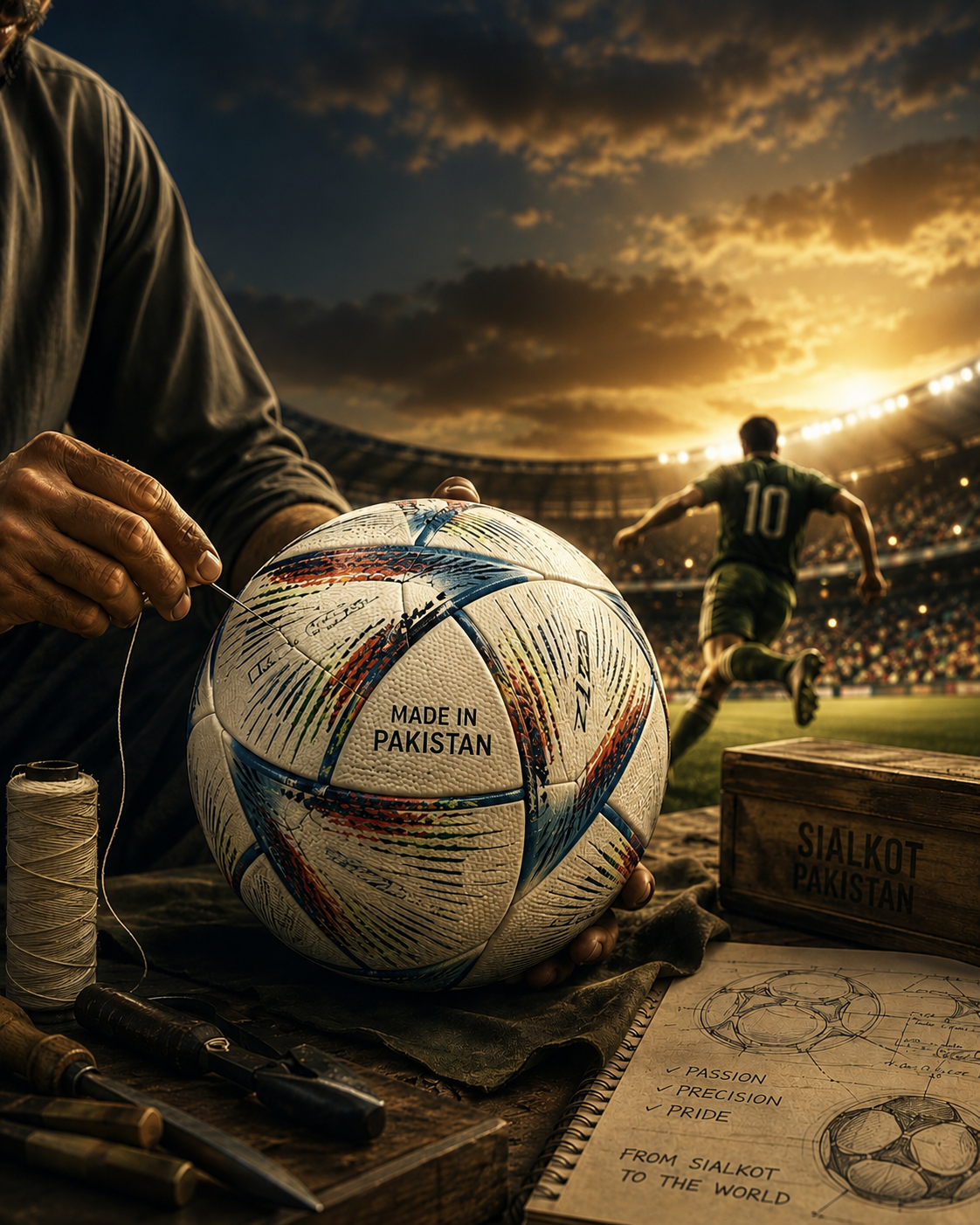

The Story the World Rarely Talks About:
Every FIFA World Cup creates moments that become part of football history. A last-minute winner, a stunning save, a trophy lifted under a shower of confetti—these are the images that stay with us forever. Yet, behind every unforgettable goal lies a story that rarely makes the headlines.
It is the story of a football. And for decades, that story has often begun in Sialkot, Pakistan.
While Pakistan has never played in a FIFA World Cup, it has quietly become part of football’s biggest tournament by producing some of its most iconic official match balls. Long before the first whistle blows, the journey of the World Cup ball starts in workshops where craftsmanship has been passed down from one generation to the next.
It is one of Pakistan’s most remarkable contributions to global sport—one stitched together with patience, precision, and extraordinary skill.
The City That Built Football’s Reputation:
Sialkot is often called the football capital of the world, and for good reason.
For decades, the city has supplied footballs to professional clubs, international tournaments, and some of the biggest sporting brands on the planet. Since the 1982 FIFA World Cup, footballs manufactured in Sialkot have repeatedly found their way onto football’s grandest stage, becoming a trusted part of World Cup history.
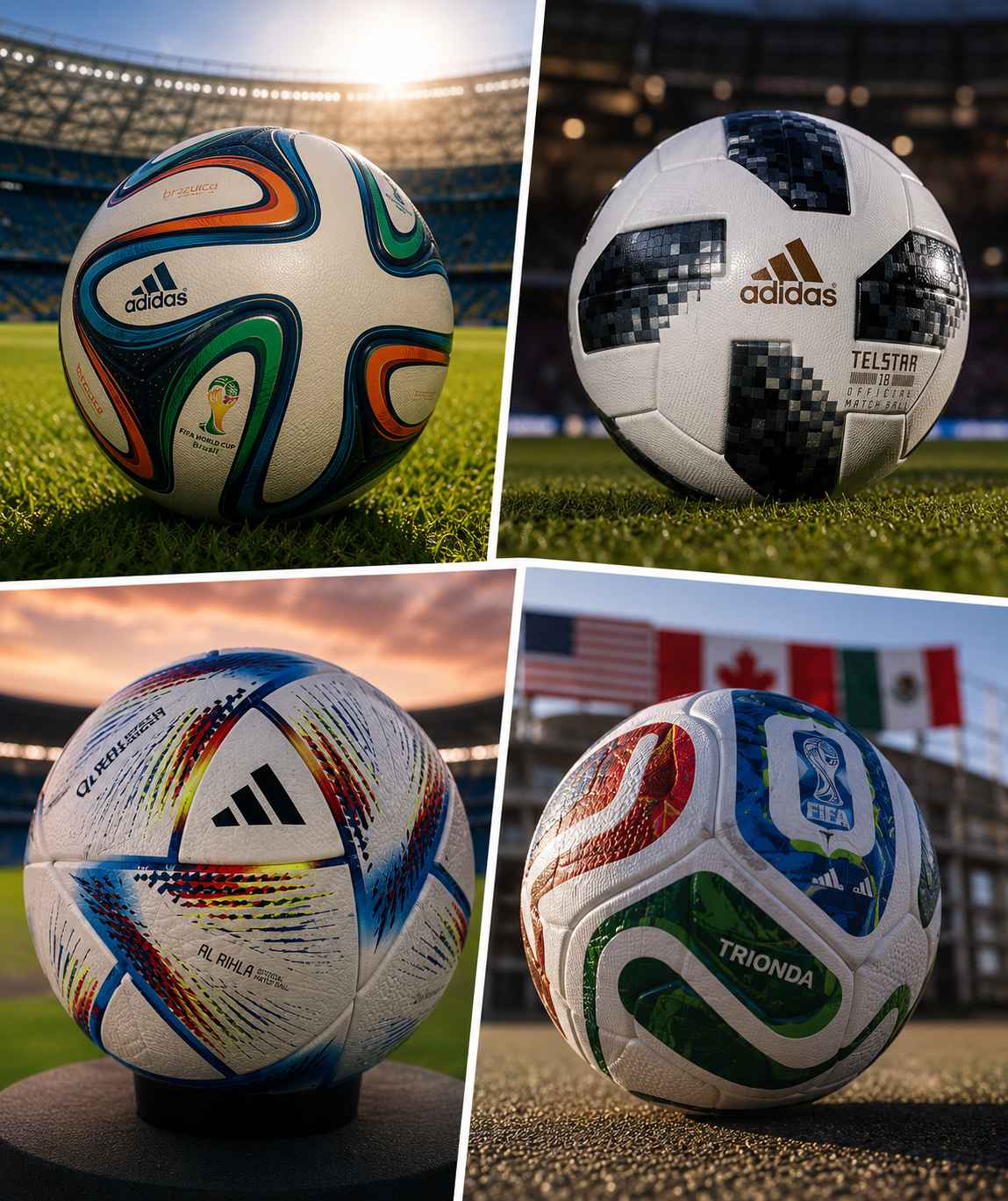
From the iconic Tango España to Tricolore, and in recent years Brazuca, Telstar 18, Al Rihla, and the latest Trionda, Pakistan’s craftsmanship has remained part of the game’s evolution.
Each tournament introduced a new design and improved performance, but one thing remained remarkably consistent—the trust placed in the skilled hands of Sialkot’s craftsmen.
Crafted by Hand, Trusted by the World:
What makes Pakistan’s footballs truly special is not just where they are made, but how they are made.
Behind every World Cup ball are skilled artisans who spend years mastering techniques that require remarkable precision. Every panel is carefully cut, stitched or thermally bonded with exceptional accuracy, ensuring the ball meets FIFA’s demanding standards for shape, balance, durability, and performance.
Many of these skills have been passed down through families for generations. In countless workshops across Sialkot, football making is more than a profession—it’s a tradition. Every stitch represents hours of dedication, transforming simple materials into a football worthy of the world’s biggest sporting event.
Innovation Without Losing Tradition:
As football technology evolved, so did Pakistan’s manufacturers.From leather footballs in the early years to modern thermally bonded designs equipped with connected-ball technology, Sialkot adapted with every generation.
The Brazuca featured a revolutionary six-panel design for greater consistency. Telstar 18 became the first World Cup ball with an NFC chip, allowing fans to interact with it digitally. Al Rihla introduced Connected Ball Technology, helping referees make faster and more accurate offside decisions.
Despite these technological advancements, the foundation remained the same: exceptional craftsmanship backed by decades of experience.
A Legacy Beyond the Scoreboard:

Pakistan’s role in the FIFA World Cup is unlike that of any competing nation.
Its name may not appear on the tournament table, but it has been present in countless moments that shaped football history.
Every pass, every save, every free kick, and every winning goal began with a ball crafted by hands that most fans will never know.Perhaps that is what makes this story so extraordinary.
The greatest contribution is not always made under stadium lights. Sometimes, it begins quietly—in a workshop where passion, patience, and craftsmanship come together to create something the entire world will one day watch.
More Than Just “Made in Pakistan”:
The words “Made in Pakistan” printed on a football are more than a manufacturing label.
They represent decades of trust, craftsmanship, and excellence that have earned Pakistan a place in football’s greatest tournament.
Players may win the matches. Nations may lift the trophy.
But before history is written, before the celebrations begin, and before the world watches its biggest game, there is always one thing at the centre of it all.A football that carries a small but unforgettable piece of Pakistan.
