

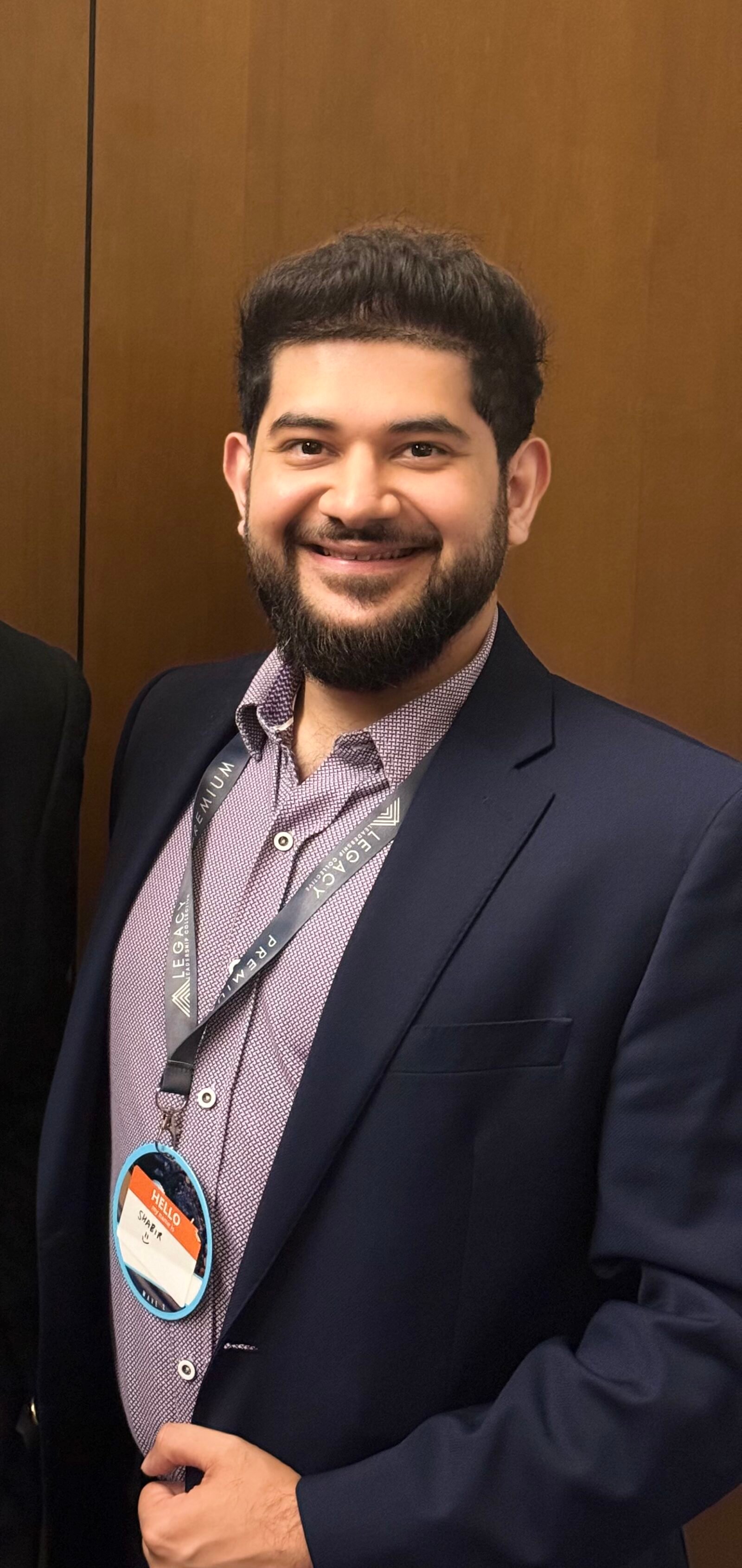

The Director of Al Enablement at Cengage shares his career journey and practical advice for young professionals and entrepreneurs looking to compete globally.
Artificial intelligence is reshaping how industries work, learn, and grow. Helping lead that transformation is Shabir Mustehsan, Director of Al Enablement at Cengage, a global education technology company serving millions of learners and educators.
After moving to the United States from Pakistan at a young age, Mustehsan built a career spanning Al strategy, governance, enterprise transformation, and media. He also founded Seriously Agile Media, which helps talented people from Pakistan and South Asia gain international visibility in American Media.
In conversation with Team Sunday, he discusses Al Enablement, his media career journey, and what young professionals need to compete globally.
Q: Before the global recognition and corporate titles, where did it all begin?
A: I moved to the United States from Pakistan at a young age. My parents worked hard to create opportunities for my brother and me, which gave me a strong sense of responsibility. Starting over in a new country taught me resilience, curiosity, and the importance of constantly learning.
 Q: We hear a lot about AI Engineers and Researchers, but your title is Director of AI Enablement. What does that mean?
A: Al touches Finance, Legal, IT, Engineering, Product, and nearly every other function. My role is to connect those groups and guide how Al is adopted across the company.
That includes Al governance, tool selection, vendor partnerships, investment and FinOps strategy, and identifying where Al can create measurable value. Al Enablement sits between technology and business strategy, helping companies decide what to build, buy, and scale.
Q: What drew you to both technology and media?
A: Technology shapes the future, while storytelling shapes how people understand it. I enjoy solving complex problems through technology, but I also believe media can give talented people and important ideas the visibility they deserve. Those two interests now complement each other naturally.
Q: How do you balance your AI leadership role with Seriously Agile Media?
A: They are more connected than they appear. My AI work helps organizations prepare for the future, while my media work highlights the people shaping it. I stay selective about projects and focus on work that creates genuine impact. I also feel public figures in Pakistan can represent us globally if they have access to international media.
Q: How will AI change everyday life over the next five years, especially in education?
A: AI will make learning more personalized and accessible. Students will receive support based on their individual needs, while educators will spend less time on repetitive tasks and more time teaching, mentoring, and connecting with learners.
Q: What was the toughest roadblock early in your career?
A: Imposter syndrome. Some opportunities felt larger than my experience, but I learned that confidence comes through action. Taking on difficult projects before I felt fully ready became one of the biggest drivers of my growth.
Q: Why did you begin helping Pakistani and South Asian talent gain global recognition?
A: I saw exceptional talent that lacked access to influential networks and global platforms. I wanted to become a bridge between local talent and international opportunity.
Through Seriously Agile Media, I help founders, engineers, researchers, artists, and entrepreneurs gain greater visibility. When one person succeeds globally, it encourages many others to believe they can too.
Q: What is the first trait you notice in someone with exceptional potential?
A: Curiosity. Skills can be learned, but curiosity keeps people growing. The strongest leaders and problem solvers never stop asking questions.
Q: What is the biggest mistake people make when promoting themselves globally?

A: They focus too much on titles and not enough on impact. People remember the problems you solved, the value you created, and why your work mattered. Credibility comes from results, not self-promotion.
Q: What mindset shift do young people in developing tech ecosystems like Pakistan need to compete globally?
A: Stop thinking locally.
Someone sitting anywhere in Pakistan can now learn from the world’s best, collaborate globally, and build for international markets. Do not benchmark yourself only against people in your city. Build skills that meet global standards.
If I had tools like ChatGPT in college, I would have learned much faster. Knowledge is widely available now. Curiosity and discipline determine how far you take it.
Q: Should people focus on technical AI skills or communication and networking?
A: Both. Technical skills help you build. Communication, leadership, and relationships help your work create impact. As AI advances, judgment, creativity, and the ability to work with people will become even more valuable.
Q: What would you tell a 20-year-old with only a laptop and an idea?
A: Build something. Start small, publish it, gather feedback, improve it, and repeat. Progress comes from action, not endless planning.
Q: What legacy do you hope to leave?
A: I want to help people see bigger possibilities for themselves. If my work helps someone build a career, launch an idea, gain recognition, or believe they belong on a global stage, that would be a meaningful legacy.
