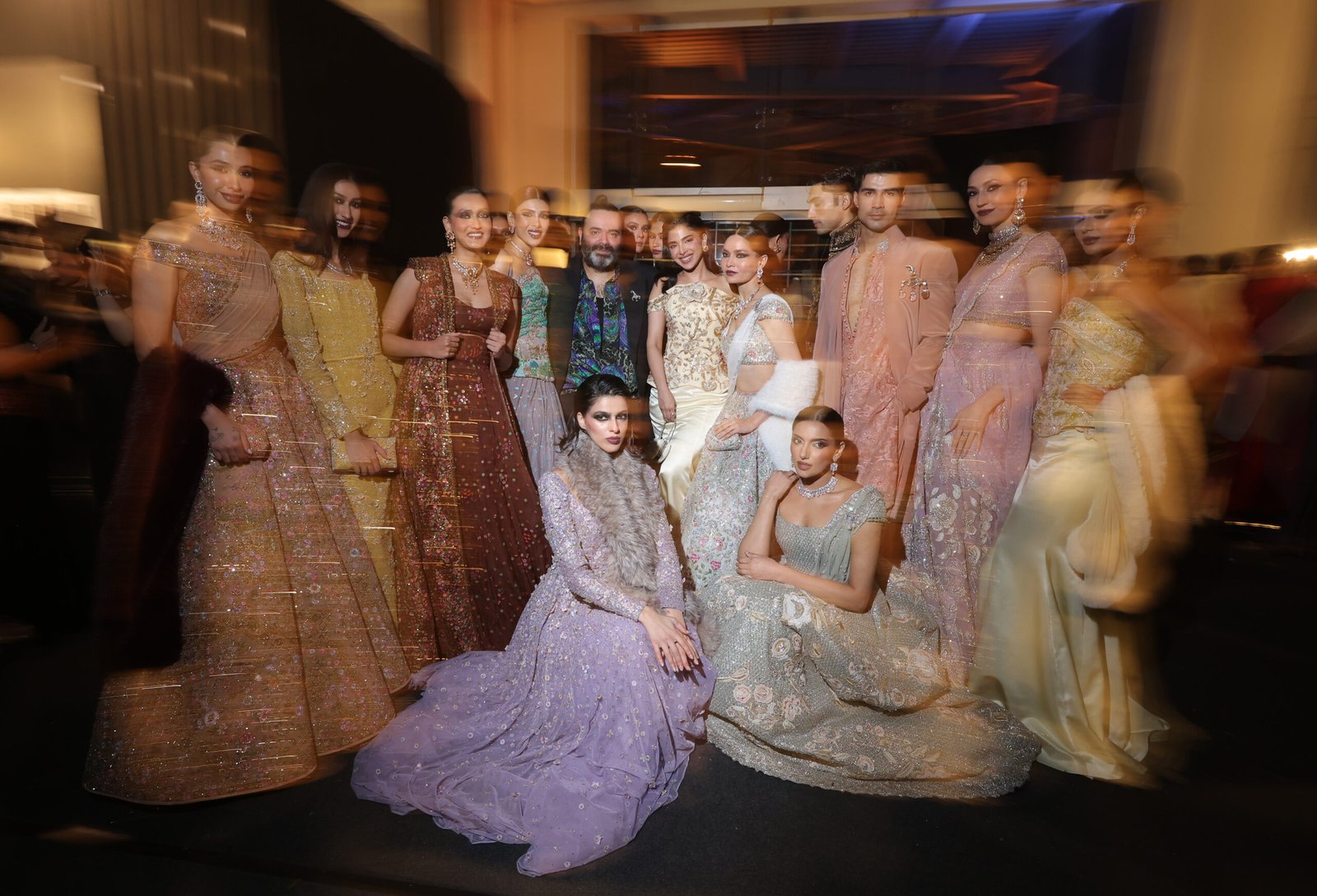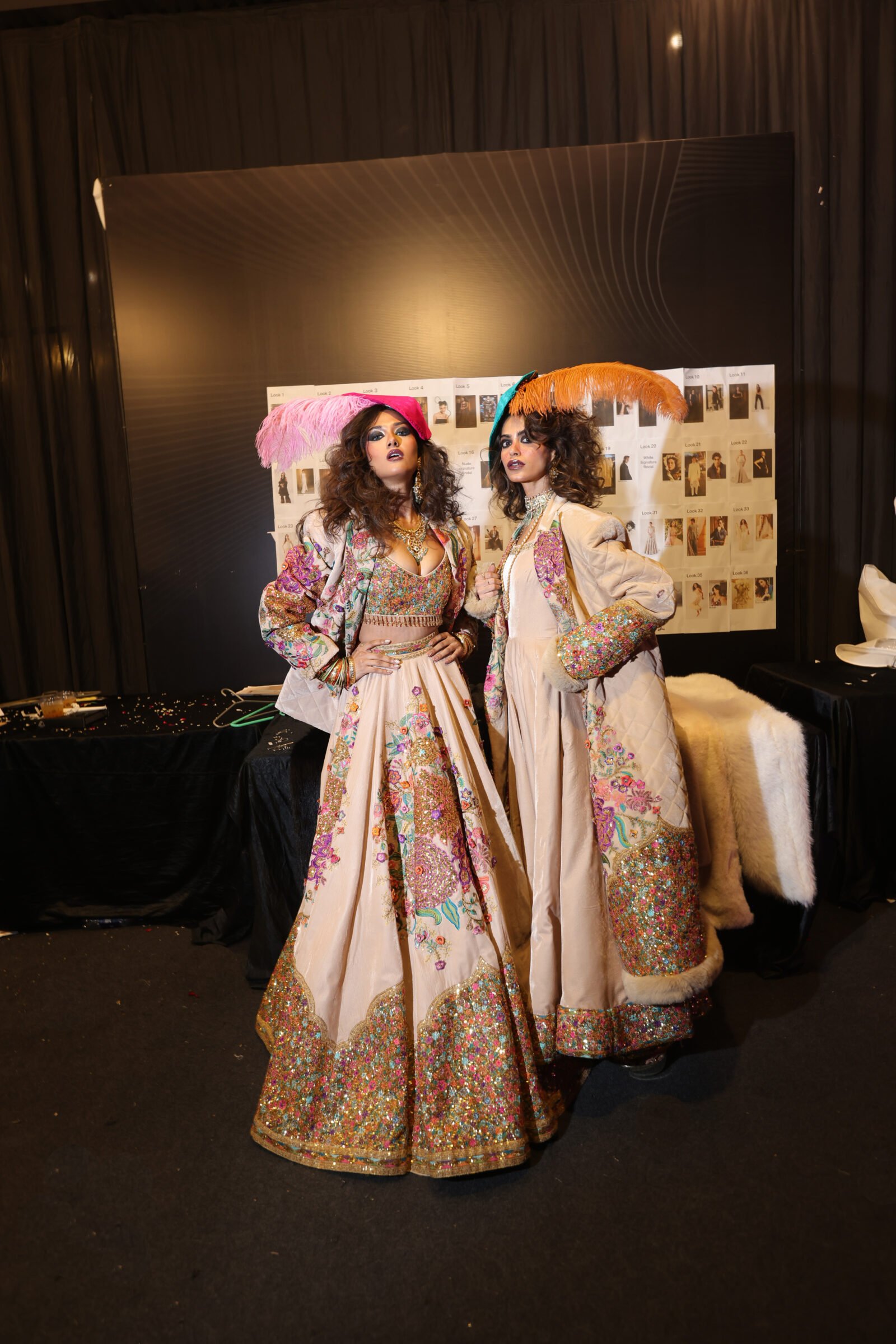

With AN ATLAS OF EMPIRES, Fahad Hussayn’s Print Museum delivered a compelling argument for Pakistani couture on an international stage, combining extraordinary garment engineering, theatrical production and a radical new interpretation of heritage.
Somewhere in the front row at Lahore Fashion Week, a woman was overheard saying, “This is as good as Dior.”
It was a bold comparison. But as Fahad Hussayn’s AN ATLAS OF EMPIRES unfolded, it became increasingly difficult to dismiss.
There was the precision of the garments, the scale of the production, the extraordinary styling and, perhaps most importantly, the confidence of a designer who seemed entirely uninterested in following the established rules of Pakistani couture.
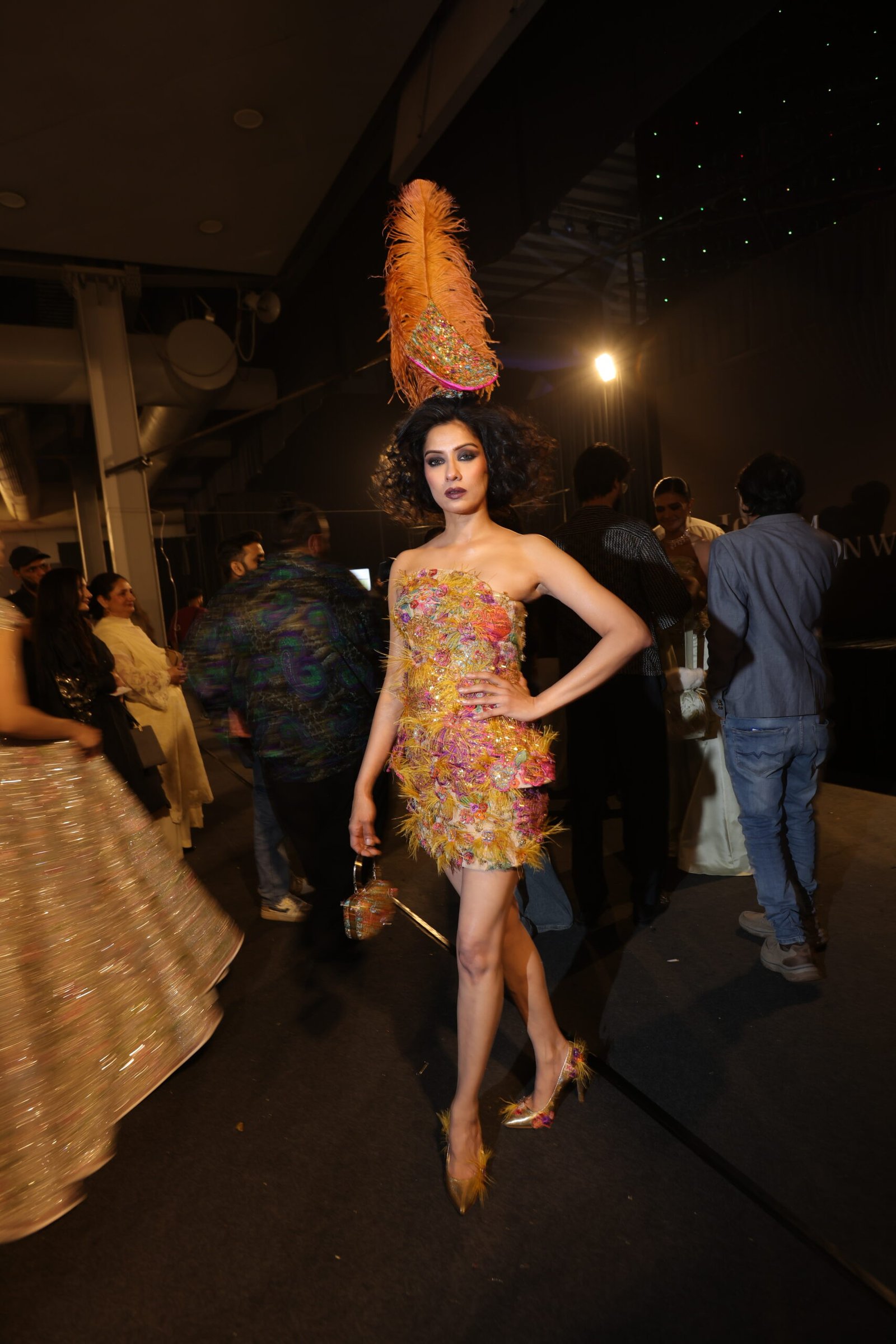
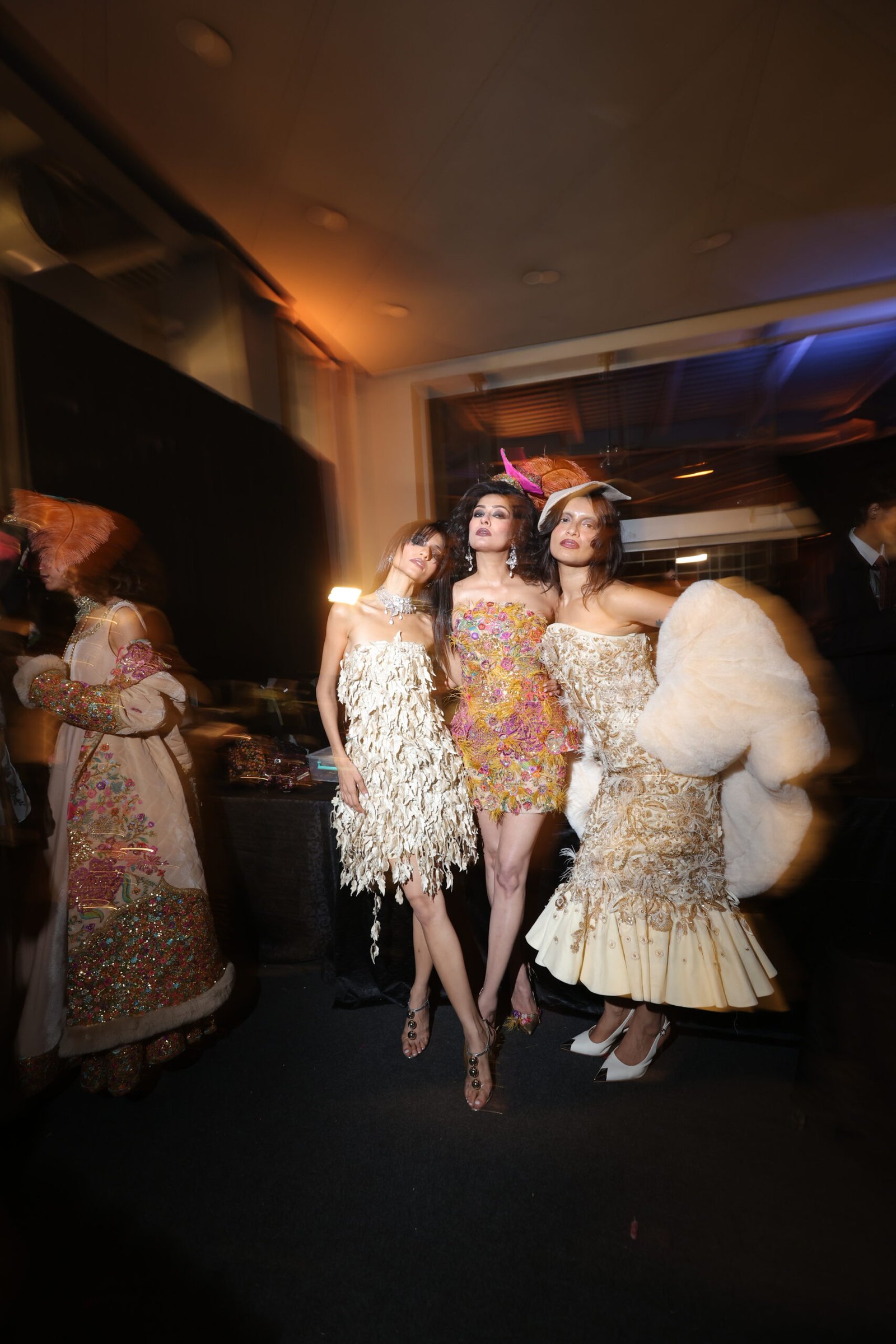
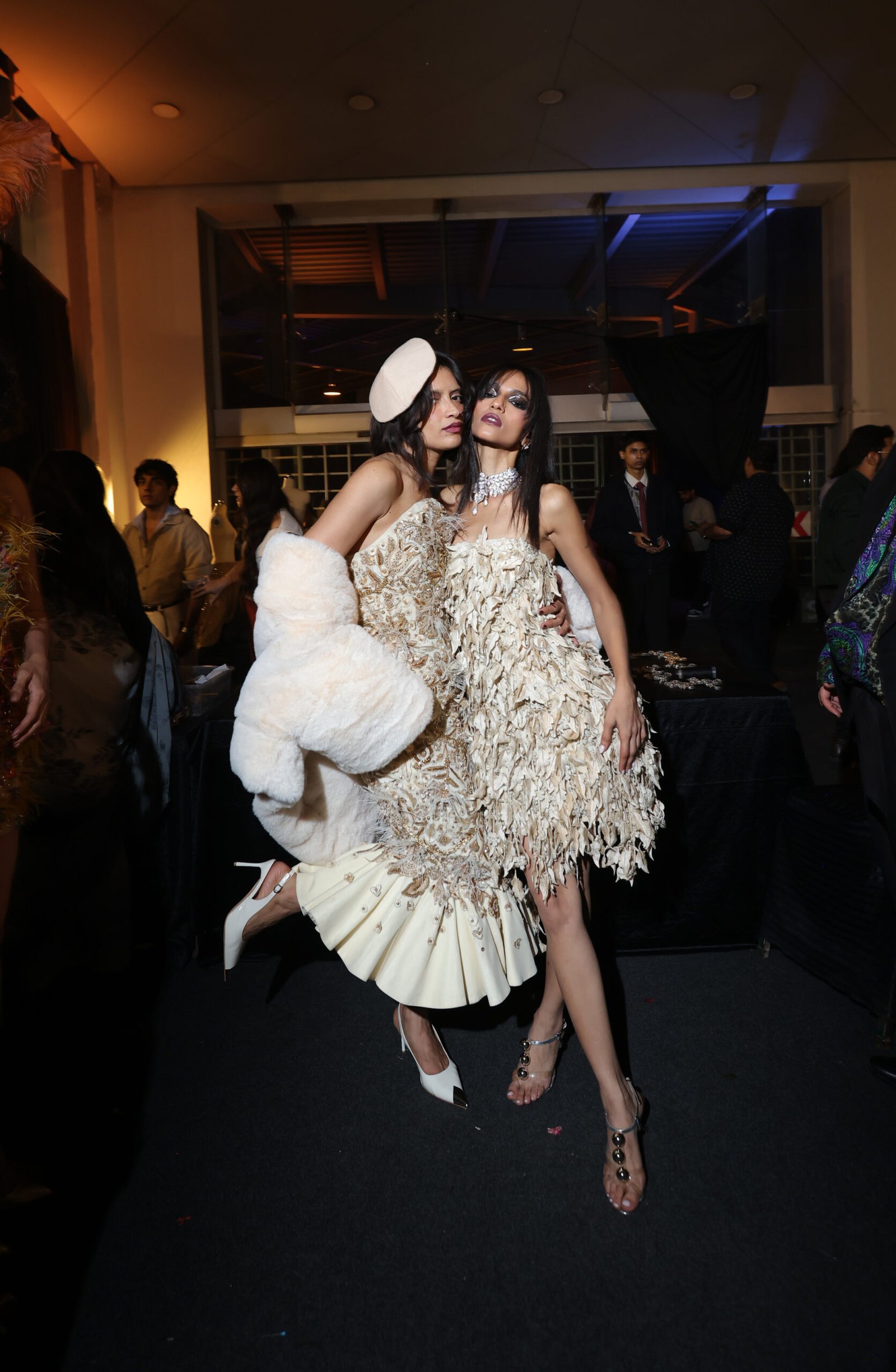
What Print Museum presented was not simply another extravagant collection. It was a convincing demonstration of how technical innovation, cultural intelligence and a fully realised creative vision can redefine the standards of luxury fashion.
COUTURE IS MORE THAN EMBROIDERY:
For an industry that frequently equates couture with the density of embellishment, the construction of AN ATLAS OF EMPIRES offered a refreshing counterargument.
The QUTLUGH Alta Moda range explored sculptural corsetry, engineered silhouettes, complex internal structures and custom-developed surfaces, combining traditional atelier craftsmanship with industrial precision.
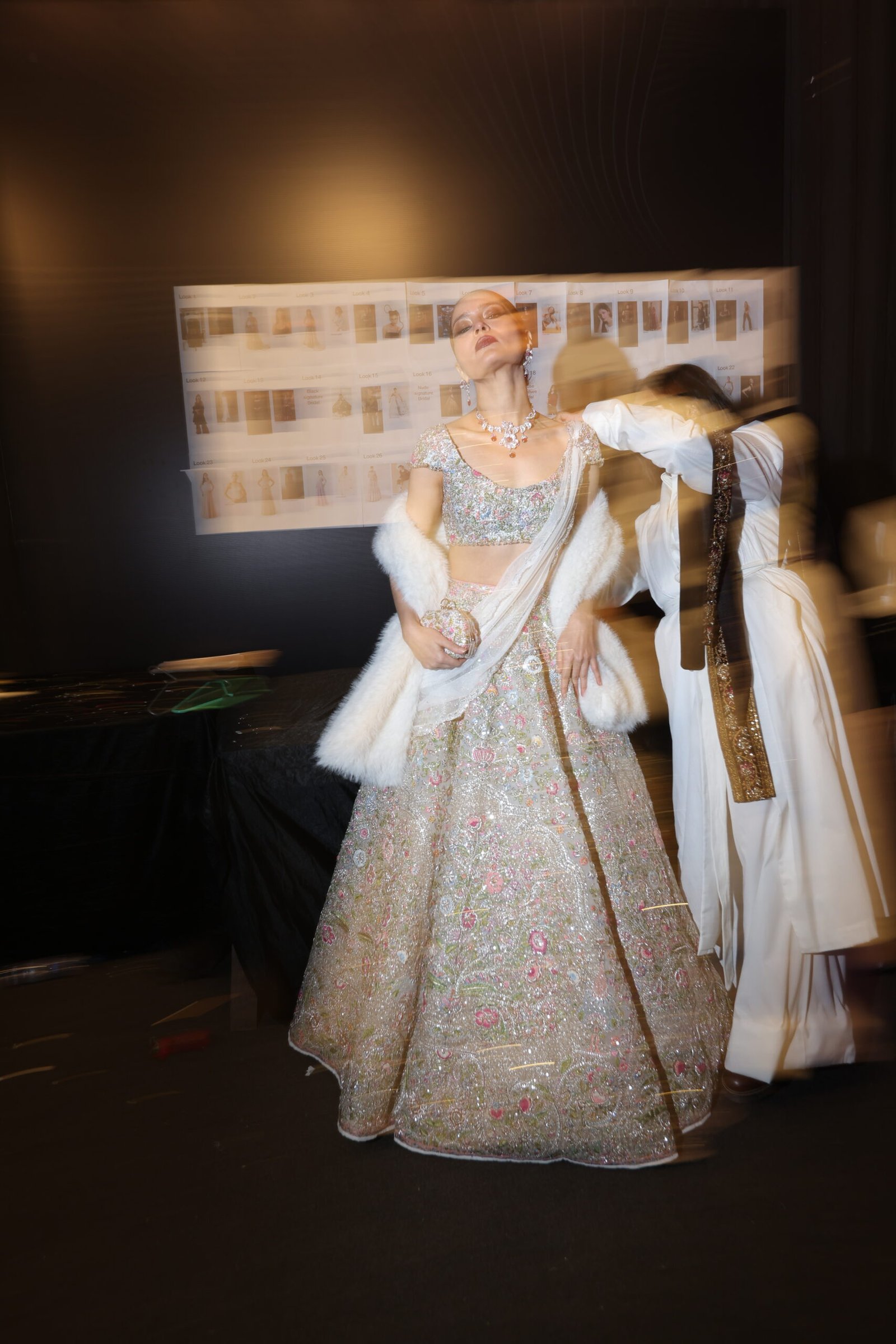
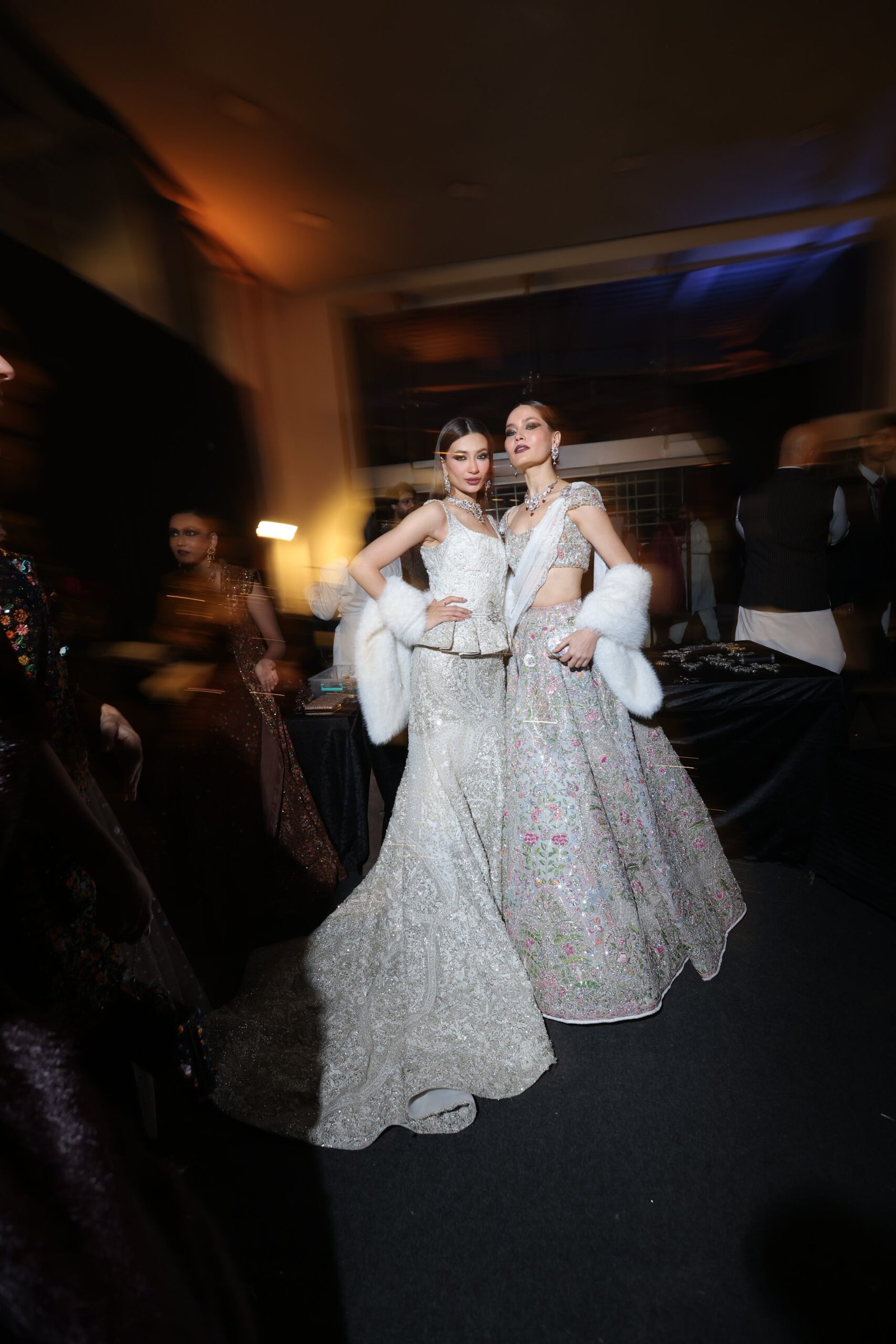
The distinction was immediately apparent. These garments did not depend on ornamentation to communicate their value. Their architecture was the luxury.
Hussayn’s approach challenges the assumption that industrial processes and couture craftsmanship must exist in opposition. Instead, he uses both to expand the possibilities of construction, creating garments whose technical sophistication is as compelling as their visual impact.
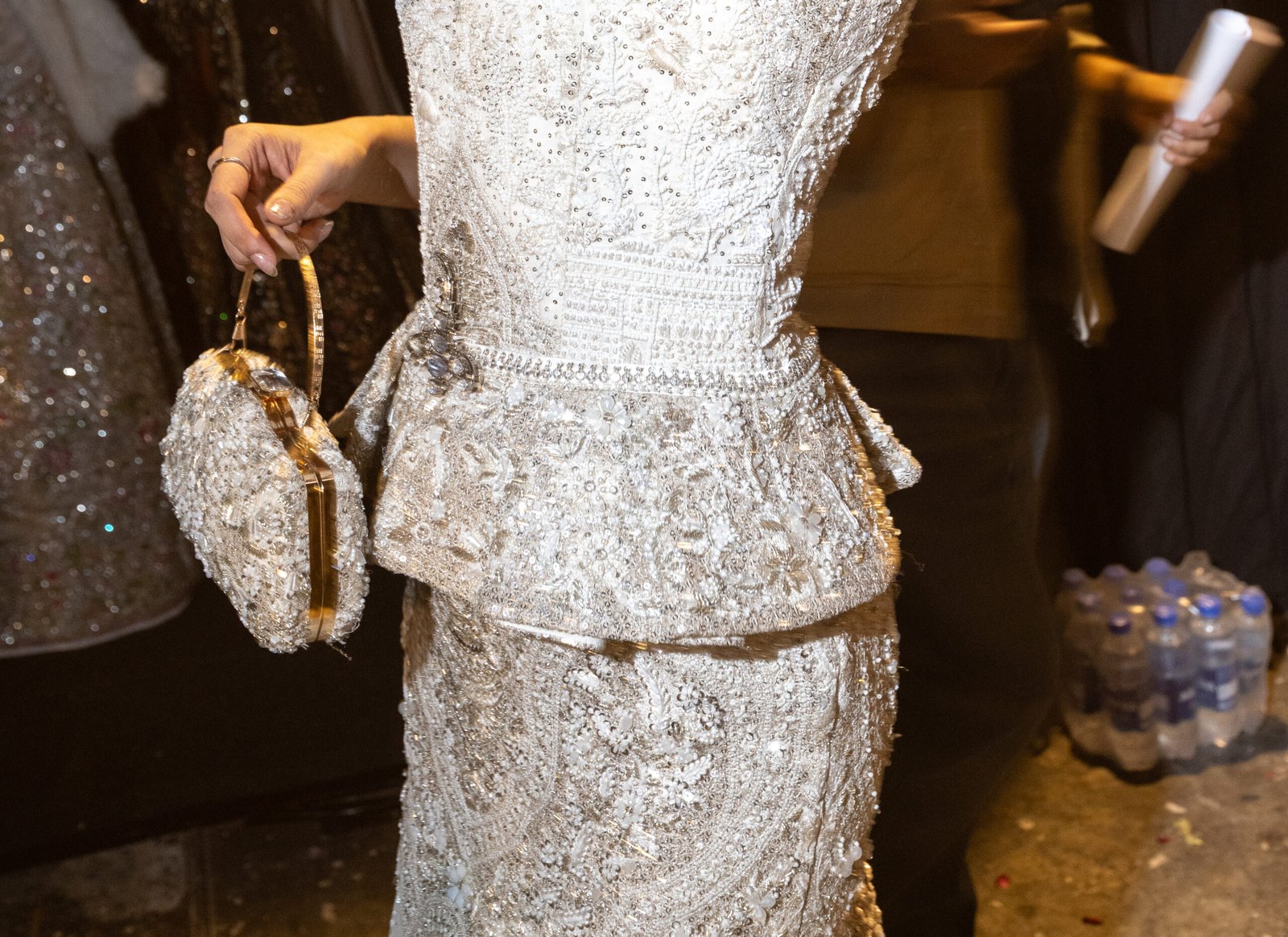
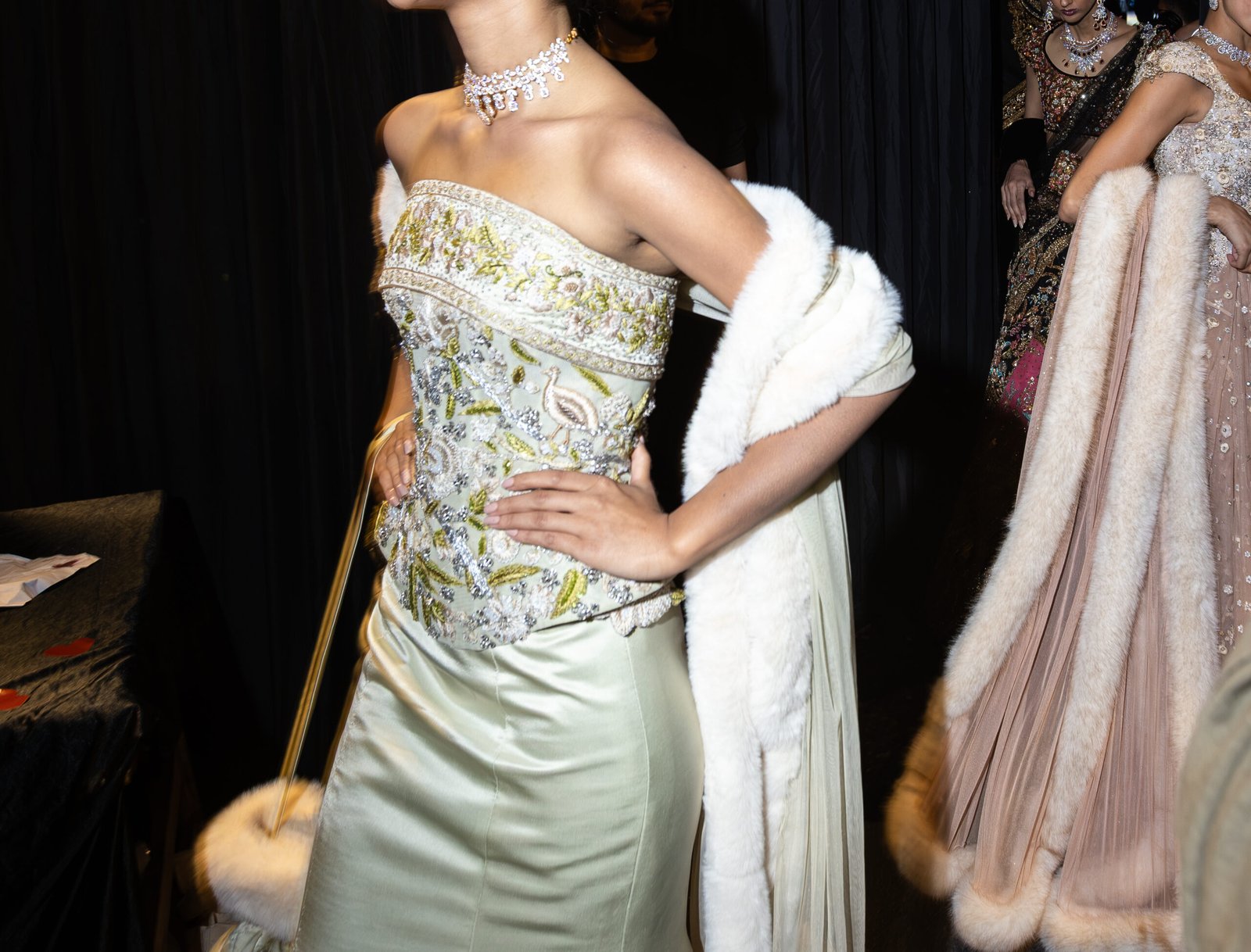
It was couture defined by design intelligence rather than decoration alone.
A PRODUCTION THAT RAISED THE STAKES:
The clothes were only part of the achievement.
Through the Fahad Hussayn Academy of Couture & Art Forms, the presentation became a fully realised theatrical production in which music, visuals, styling and narrative worked together with remarkable cohesion.
Rather than simply sending models down a runway, Hussayn constructed an entire world around the collection.
The cinematic direction and carefully orchestrated atmosphere gave the garments a dramatic context rarely achieved in conventional fashion presentations.
It also demonstrated the Academy’s extraordinary multidisciplinary capabilities. Bringing creative direction, fashion, performance and production into one cohesive experience requires more than resources. It demands a singular artistic vision.
In an industry where runway productions are often treated as supporting events, the Fahad Hussayn Academy made the production itself an art form.
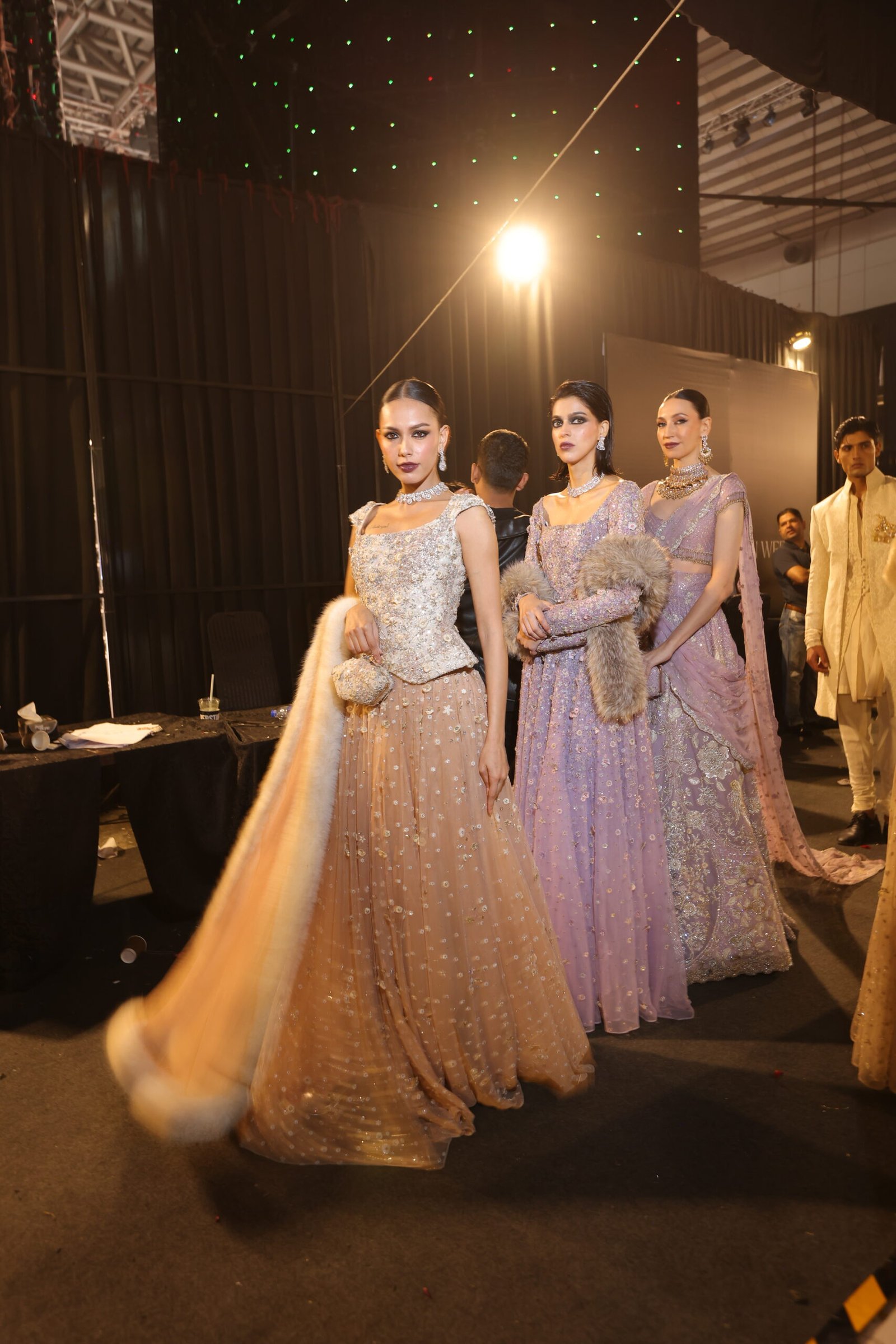
BEYOND THE RUNWAY, A COMPLETE LUXURY WARDROBE:
What made the presentation particularly impressive was its ability to deliver theatrical fashion moments without sacrificing commercial relevance.
Across three distinct ranges, Print Museum presented a comprehensive winter wardrobe spanning experimental Alta Moda, Signature Weddings and festive evening wear.
QUTLUGH supplied the avant-garde statements. KHANZADA reconsidered the language of bridal luxury. ATHDARA brought contemporary sophistication to winter festivities through rich velvets, intricate surfaces and modern silhouettes.
The collection understood that a successful luxury fashion house must be capable of both inspiring an audience and dressing its clientele.
That balance is harder to achieve than it appears.
BRIDALWEAR, REENGINEERED:
With KHANZADA, Hussayn made one of the collection’s most significant interventions.
Traditional bridal silhouettes were reconsidered through structured corsets, pre-draped compositions and detachable styling attachments, introducing a more architectural and versatile approach to ceremonial dressing.
Instead of relying solely on elaborate embroidery and conventional draping, the garments offered precision, structure and considered styling as defining elements of bridal luxury.
The cultural grandeur remained intact, but the methods of achieving it had changed.
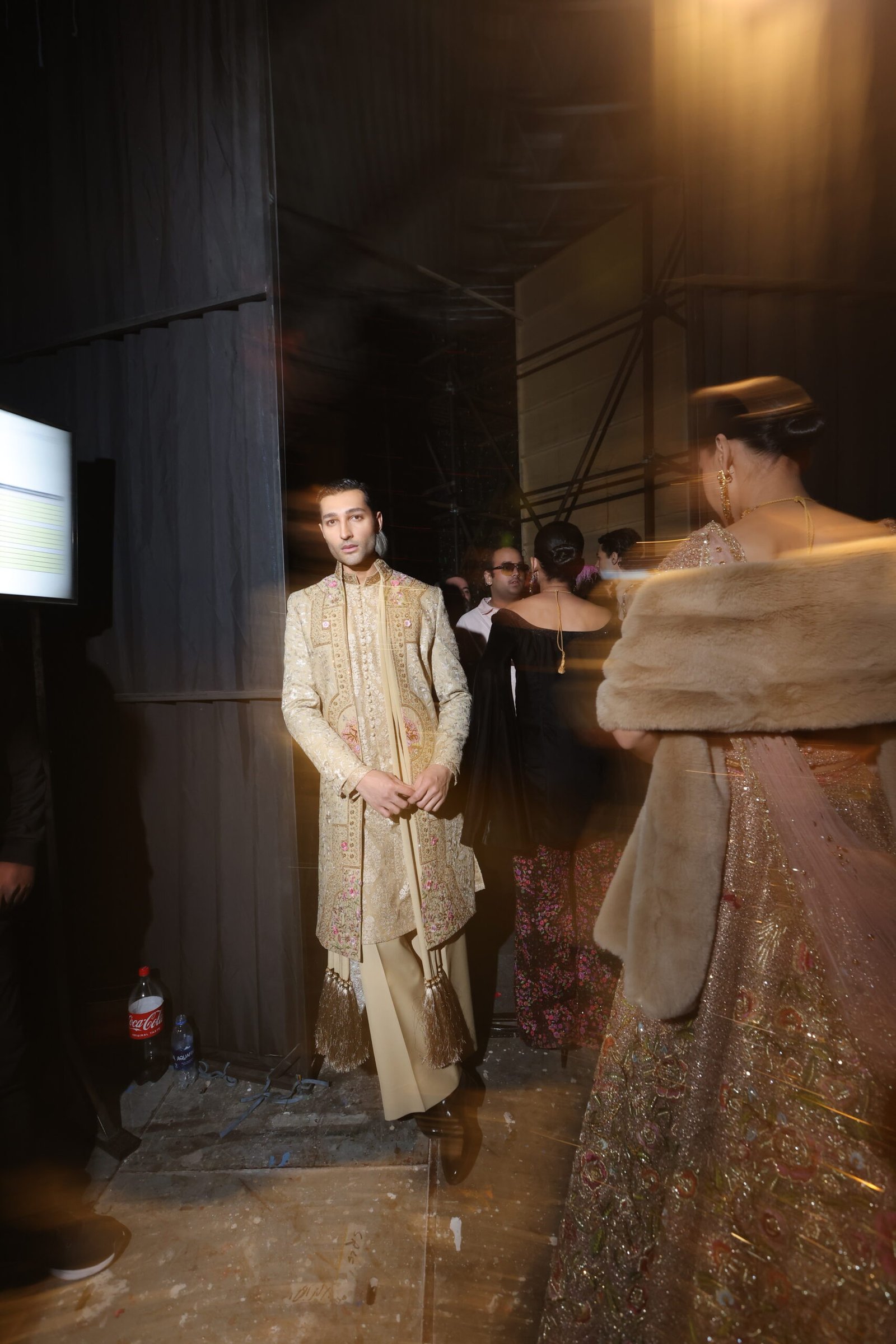
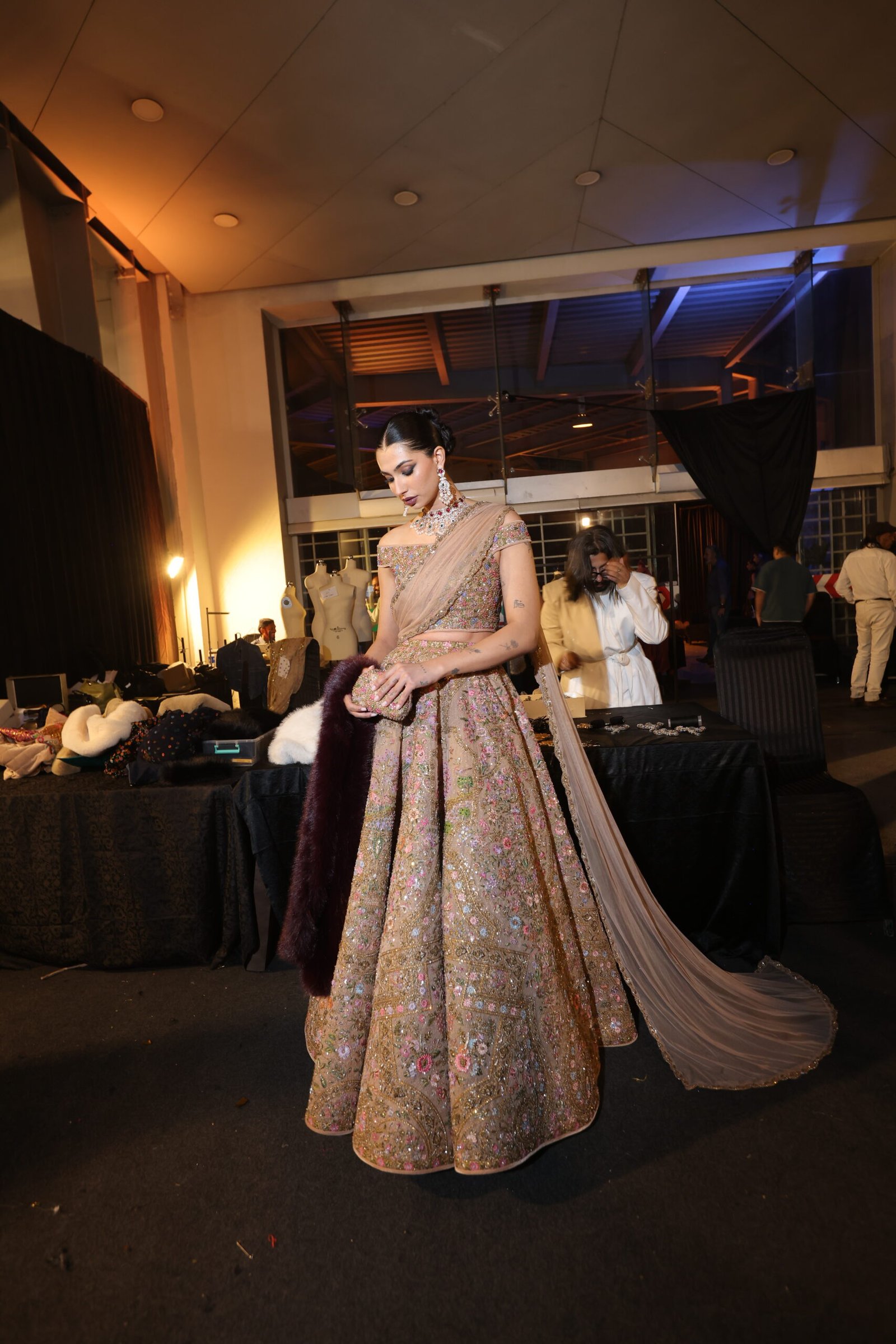
For a bridal industry that has spent decades competing over embellishment, KHANZADA suggested that the next measure of excellence will be innovation in construction.

It is a standard worth paying attention to.
A NEW WAY OF LOOKING AT HERITAGE:
The collection’s most intellectually ambitious achievement, however, was its interpretation of cultural identity.
Rather than treating heritage as a fixed aesthetic belonging to one region or historical period, AN ATLAS OF EMPIRES examined how cultures evolve through geographical movement and exchange.
Influences from Central Asia, Persia, Afghanistan and the Indian subcontinent informed a visual language shaped by architecture, geometry, decorative traditions and the movement of artistic ideas across empires.
References drawn from the Lahore Fort were deconstructed and transformed into contemporary silhouettes, engineered surfaces and sculptural details.
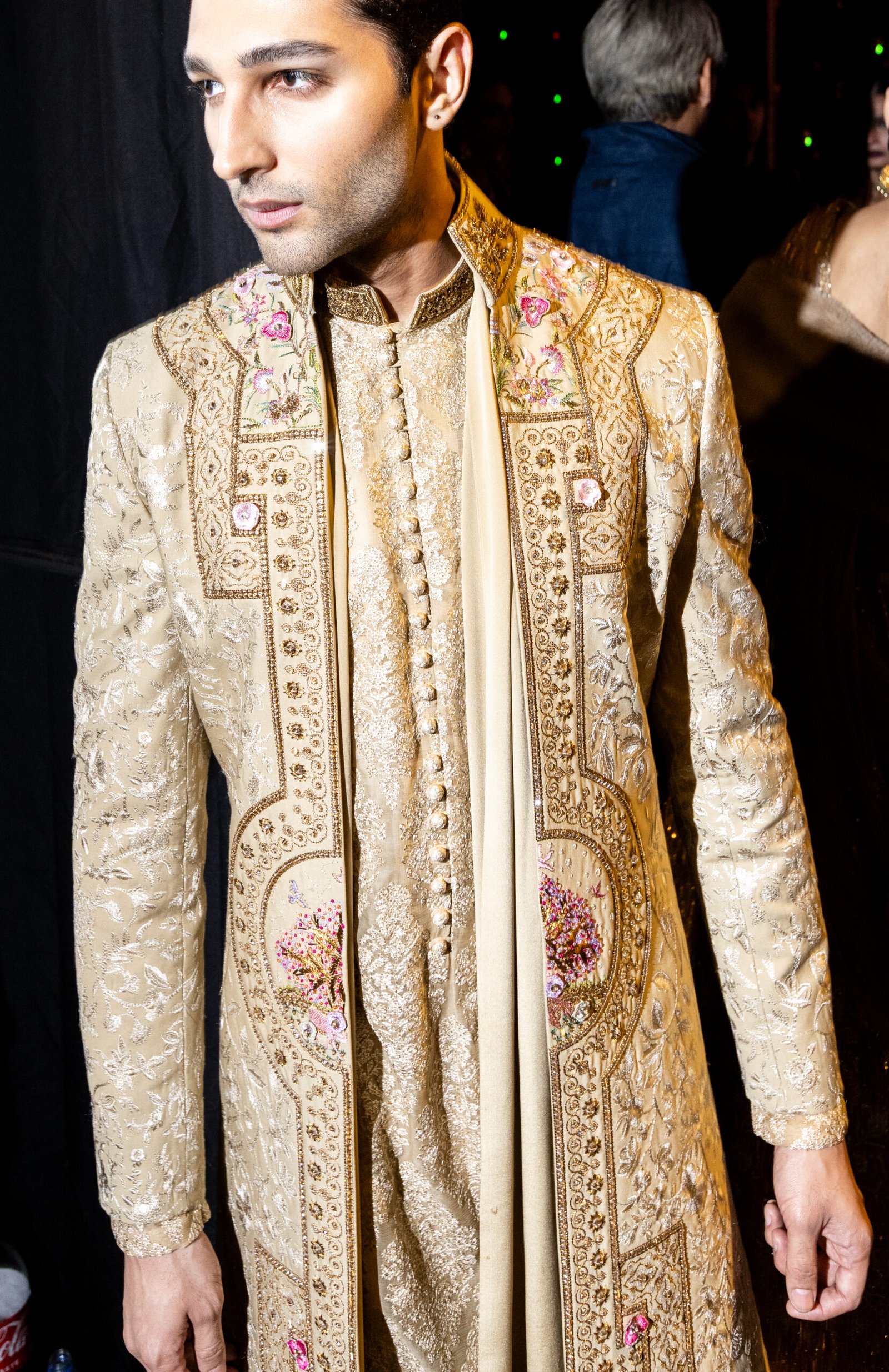
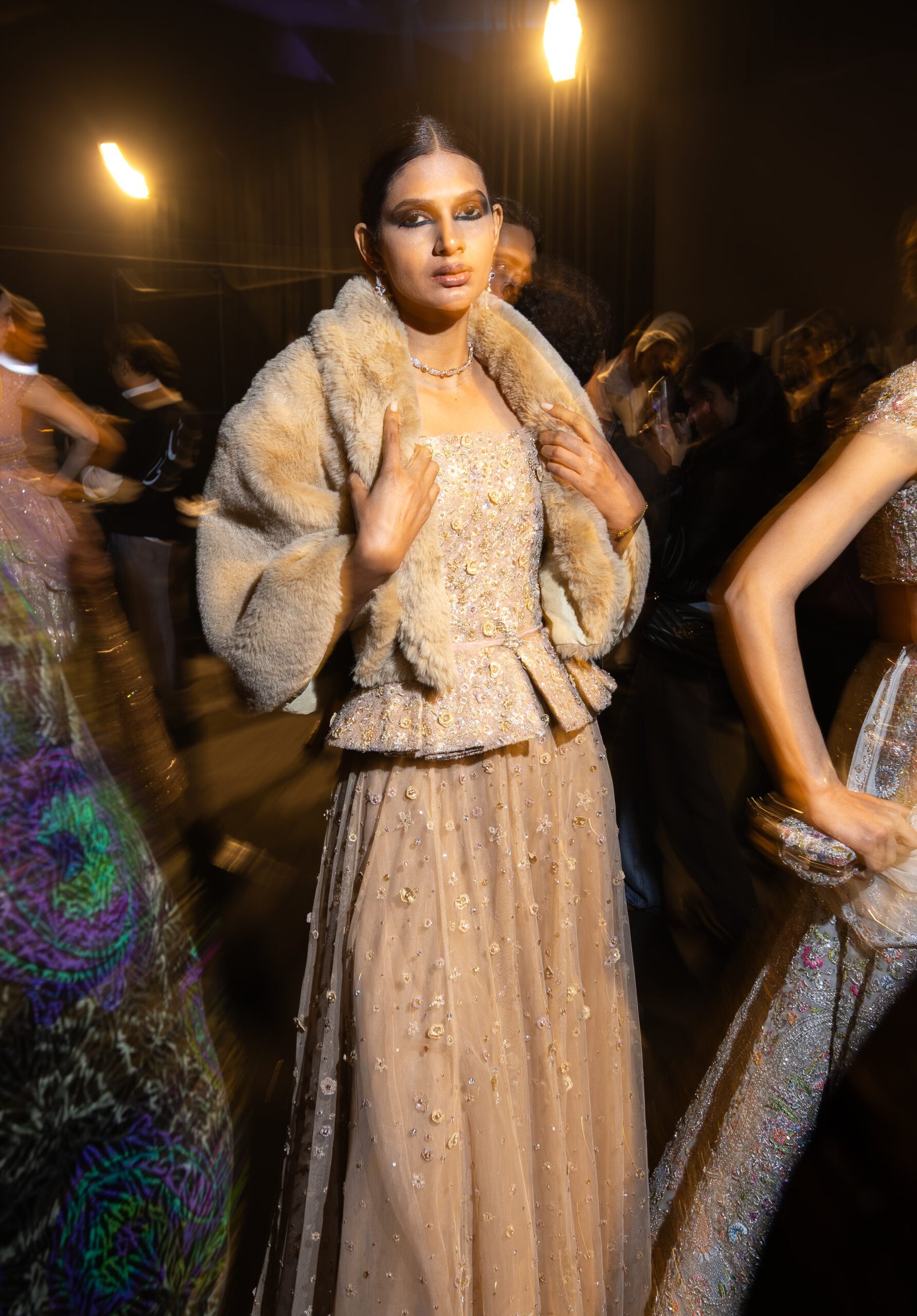
The result avoided the familiar trap of historical costume.
Hussayn approached heritage not as something to reproduce, but as something to investigate.
The collection’s central proposition was that cultural identity is not defined by geographical purity, but by centuries of influence, exchange and reinvention.
It offered a sophisticated alternative to the nostalgic interpretations of heritage that have long dominated regional fashion.
THE DIOR COMPARISON WASN’T REALLY ABOUT DIOR:
Of course, Dior carries an institutional legacy built over generations. But the front-row remark was less about equating two fashion houses than recognising a shared level of ambition.
The precision of construction, the discipline of presentation, the scale of creative direction and the confidence of the design language all suggested a fashion house operating beyond conventional local expectations.
And that is what made AN ATLAS OF EMPIRES significant.
Print Museum was not attempting to imitate international couture. It was demonstrating how a distinctly Pakistani design identity could engage with the same standards of technical excellence and creative sophistication while offering something entirely its own.
Perhaps the most important takeaway from the evening was not that Fahad Hussayn’s work could be compared to Dior, but that Pakistani fashion had produced something worthy of such a conversation.
“Perhaps the most important takeaway was not that Fahad Hussayn’s work could be compared to Dior, but that Pakistani fashion had produced something worthy of such a conversation.”