

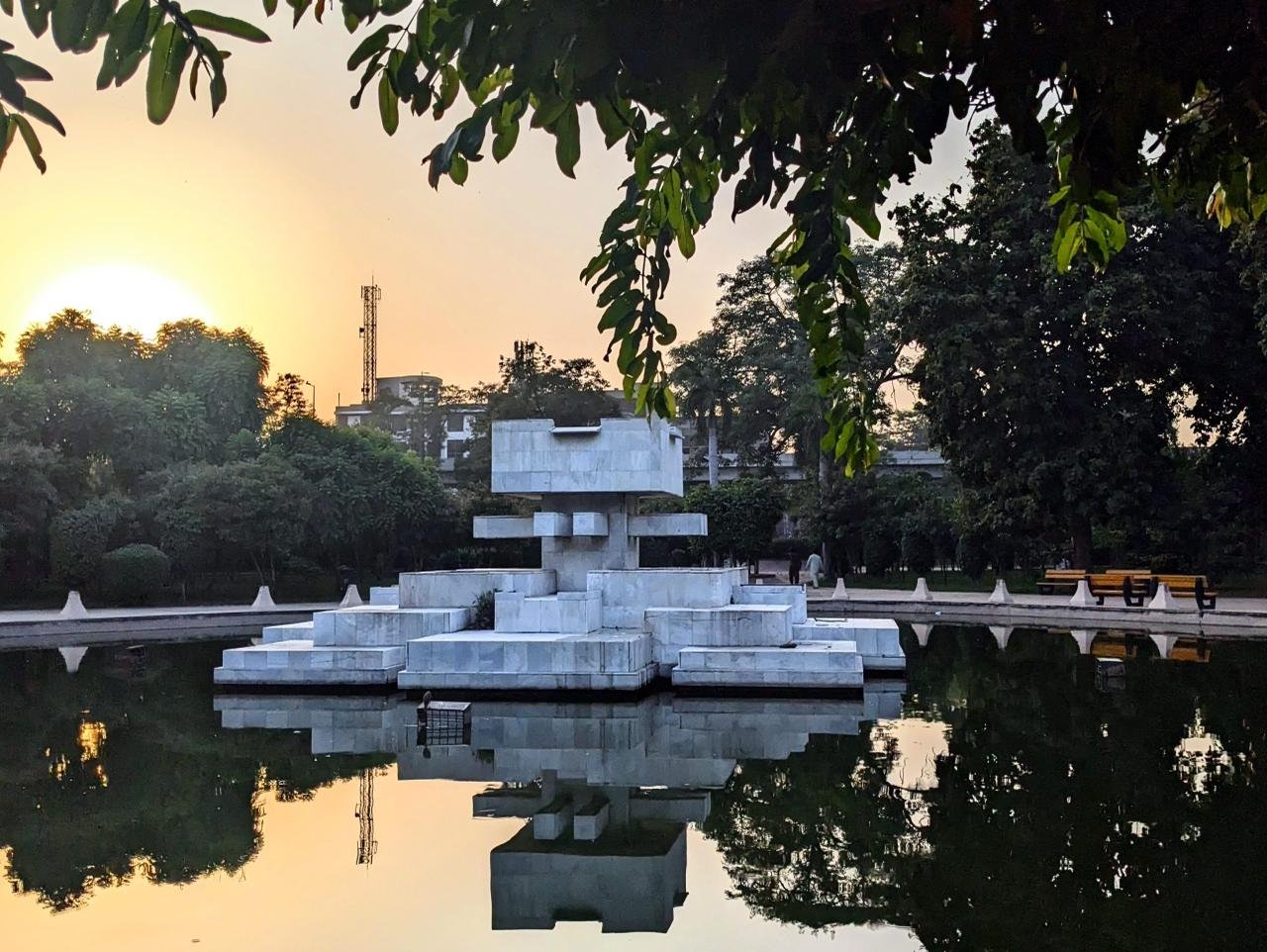

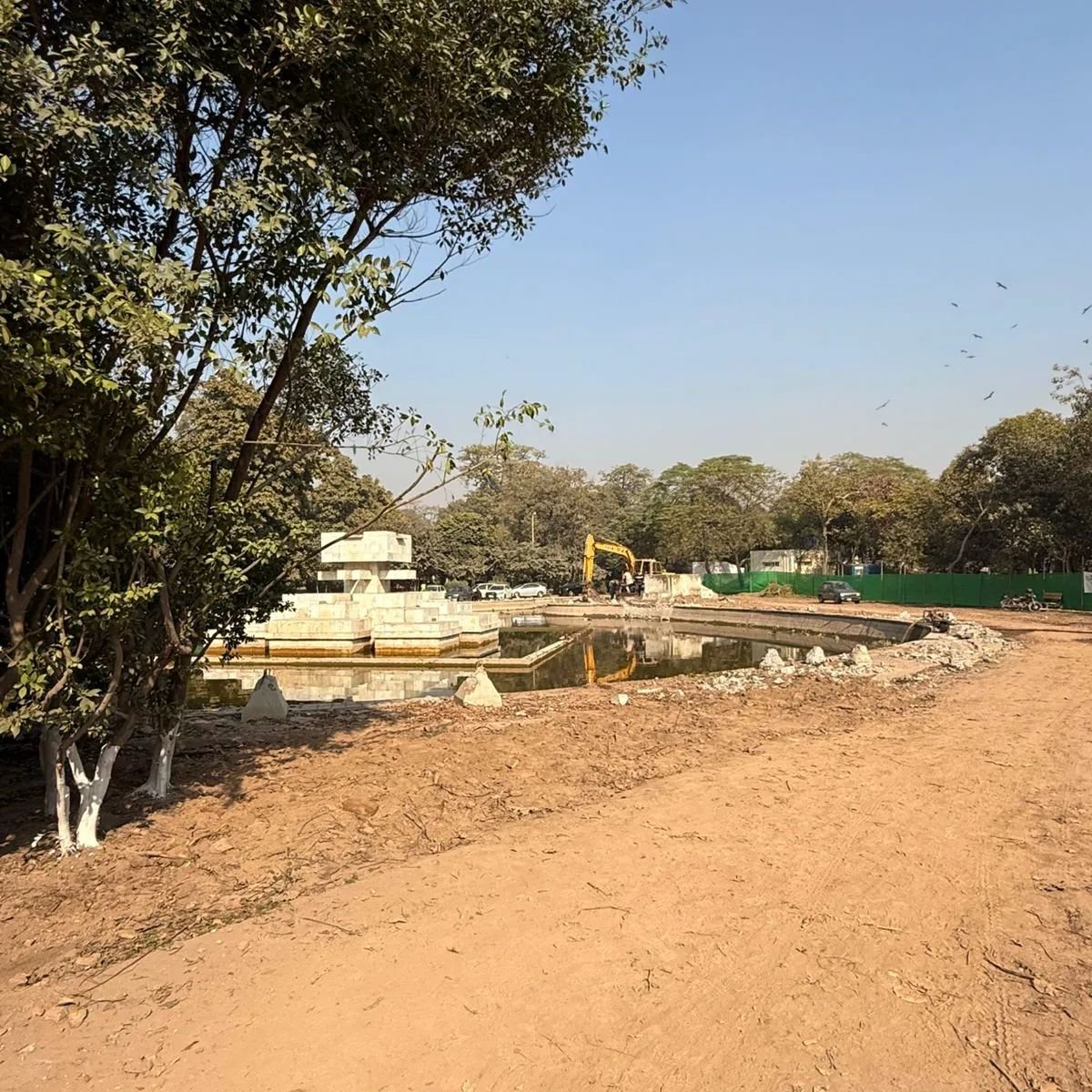
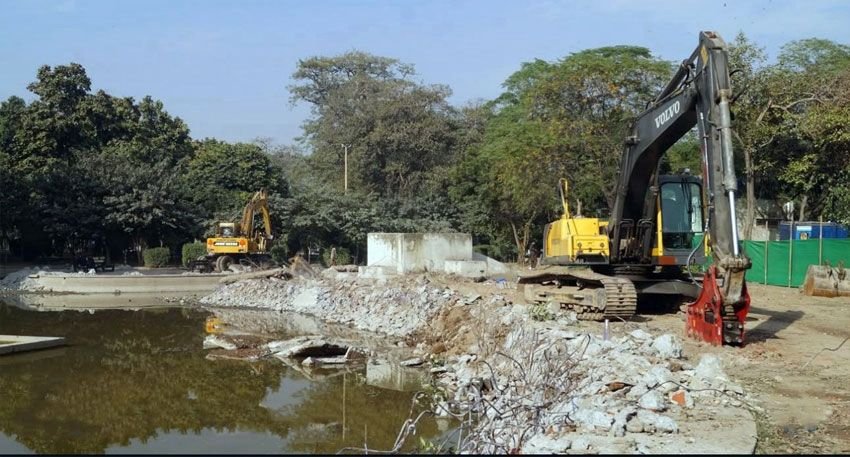
Lahore, Pakistan — The continued destruction of Nasir Bagh, one of Lahore’s last remaining historic green spaces, is proceeding unchecked as the Lahore High Court has failed to nominate any judge to hear an urgent writ petition challenging a part of it’s conversion into an underground parking plaza creating a dangerous precedent of conversion and concretization of the dearth of green spaces left in Lahore and Punjab—despite the project involving the demolition of an irreplaceable ecosystem and cultural heritage site in the City of Gardens. The park’s ecosystem including it’s biodiversity is endangered, mature trees have been cut illegally, destruction of natural water aquifer, all rules and environment related safeguards violated, all leading to a serious violation of Article 9A of the constitution of Pakistan (by agencies such as the EPA) to provide a parking lot within the park that that does not resolve the issues in the area as pointed out by the authorities such as the EPA, LDA, TEPA, PHA etc.
Lahore High Court Delay Raises Environmental Concerns:
A writ petition titled Imrana Tiwana and Others v Government of Punjab (W.P. 77360/2025) was filed on 24 December 2025, explicitly challenging the legality of the Nasir Bagh Parking Plaza Project and seeking an urgent interim injunction/stay to halt ongoing destruction.
On the same day, the petition was placed before Honourable Justice Sultan Tanvir Ahmad, who acknowledged the urgency and passed a same-day order directing that the matter be listed before Honourable Justice Shahid Karim, who is already seized of environmental and public interest litigation in the ongoing case Haroon Farooq v Government of Punjab (W.P. 227807/2025), where the Nasir Bagh project is admittedly sub judice.
Despite this clear judicial direction:
The case was not nominated before Justice Shahid Karim by the Honorable Chief Justice of the Lahore High Court admitting that the matter was not urgent enough.
The matter was expected to be heard on 26 December 2025, followed by 29, 30, and 31 December 2025.
All four consecutive hearings were cancelled or rescheduled, despite the judge being present in court.
On the morning of the scheduled hearing, the case was abruptly cancelled.
With the commencement of court holidays, the petition now stands indefinitely deferred, while irreversible environmental damage continues daily.
This administrative inaction effectively renders the right to urgent judicial protection meaningless, allowing the State to complete the very illegality being challenged before the court can even hear the case.
Constitutional Crisis:
The failure to hear this urgent environmental petition constitutes a grave violation of fundamental rights, including:
Article 4 — Right to be dealt with in accordance with law
Article 9 — Right to life, which unequivocally includes the right to a clean and healthy environment
Article 9A — Right to clean air and environmental protection
Article 14 — Right to dignity of citizens and communities
When courts delay hearing urgent environmental matters, justice is denied not only to petitioners, but to the city of Lahore itself, its residents, and future generations.

A Vanishing Heritage: Nasir Bagh Under Threat
Nasir Bagh is not vacant land. It is a historic public garden, part of Lahore’s ecological and cultural identity. Its conversion into a parking plaza represents the systematic erasure of green spaces, its encompassing biodiversity and a whole ecosystem in direct contradiction to constitutional jurisprudence, environmental law, and multiple Lahore High Court precedents recognizing the public trust doctrine.
Call to Immediate Judicial and Public Attention:
The petitioners call upon:

The Honourable Chief Justice of the Lahore High Court
The judicial administration
The media, civil society, and environmental advocates
to take immediate notice of this denial of access to justice and the unchecked destruction of a public trust asset.
Environmental harm is irreversible. Judicial delay, in this case, is not neutral—it is enabling destruction. This is not just about trees, it is about the ecosystem that lives with it.
Justice delayed here is justice destroyed.
Signatories and Supporting Organizations:
- Lahore Conservation Society through its representatives
- Human Rights Commission of Pakistan
- Ravi Bachao Tehreek
- Progressive Students Collective
- WWF Pakistan
- EARC [Environmental & Animal Rights Consultants Pakistan]: – Altamush Saeed
- Institute of Architects Pakistan
- Professor Rabia Ezdi Environmentalist Architect
- Architect/Urbanist/Conservationist: Arif Hassan
- Award Winning Architect/Urbanist/Heritage & Conservation Expert: Dr. Yasmeen Lari
- Ex-Principal NCA/LCS Board: Fauzia Qureshi –
- Architect/Urbanist/Environmentalist LCS: Kamil Khan Mumtaz –
- Architect Urbanist Heritage Specialist Urbanist
- LCS Board/NADA: Raza Ali Dada Architect/Urbanist/Environmentalist
- LCS/WWF: Ali Amjad – Engineer/Environmentalist – Water Stewardship
- Eram G Aftab environment and sustainability planning consultant/ LCS board
- Environmentalist Sustainable Ecologist Citizens Collective: Asma Chima/LCS Board –
- Architect Environmentalist Nabeela ITU Academician:
- Maleeha Sattar- Professor Environment & Sustainability The Hub: Madiha Saail – Mehr Rafi
- Concerned Citizens: Ambreen Zaman – Ibtesaam Pooya – Saba Qureshi Doctor: Dr. Ain ul Momina
- Psychologist: Dr. Naumana Amjad
- Generation Sustainability: Dr. Nausheen Rahman
- Soch Media: Aqeedat
- Progressive Students Collective: Ali Abdullah
- Salima Hashmi – Artist, Educator
- Dr. Saba Bokhari – Educationist
- Munize Jahangir
- Laleen Bokhari, Activist/ Animal Rights
- Mehar Hassan Rafi
- Nighat Rehman
- Saba Qureshi
